What is Tengrism anyway?
Tengrism (Tengriism, Tenriism, Tengerism, or Tengrianism) is an ancient monotheistic belief system that originated in the Eurasian steppes amongst Turkic, Hunnic and Mongolic tribes. Tengrism is centered around the acknowledgement of the sky god Tengri while carrying elements of shamanism at the practical and social levels.
Tengrism was the prevailing religion of the Turks, Mongols, Bulgars, Xiongnu, Huns (including European Huns and medieval Hungarians) and the officially recognized state religion of several medieval states such as the First Turkic Khaganate, Western Turkic Khaganate, Eastern Turkic Khaganate, Old Great Bulgaria, First Bulgarian Empire, Volga Bulgaria, and Eastern Tourkia (Khazaria / Hazar).
The core beings in ancient Tengrism were the Heavenly-Father (Tengri/Tenger Etseg) and the Mother Earth (Eje / Gazar Eej / Gaia). It involved shamanism, animism, totemism and ancestor worship.

“The Great Spirit is in all things. He is in the air we breathe. The Great Spirit is our Father, but the Earth is our Mother. She nourishes us…..That which we put into the ground she returns to us.”
– Big Thunder Wabanaki, Algonquin
Unlike ancient Tengrism, today, the belief system that the Tengrist Society adopts (Stoic Tengrism) does not involve the concept of a pantheon or any of the practical elements of shamanism, animism or totemism. The core principles of the Society combines modern scientific theories with the cultural elements of Eurasian Tengrism while placing a strong devotion to the one and only architect of the Universe, the lord of the Earth and all other worlds and dimensions, Tanrı, at the center. With a strong emphasis on the oneness of the creator (لَا إِلَٰهَ إِلَّا ٱللَّٰهُ) and a Big Bang-oriented understanding of the creation (beginning) of spacetime, the Tengrist Society reconceptualizes the phrase “sky God” in reference to singular source and starter of all light, mass and time – the one that comes upon us as an answer to all questions that arise when we look up to the skies.

What or who is this Tengri?
“There is none but one true god – the one with a thousand names and one timeless reign.”
TS
Tengri, also known as Türük Tängrisi (God of Turks) or Gök-Tanrı, (Sky-God) was the name given to the principal deity of the Turkic (including Hunnic and Mongolic) populations of the Eurasian steppes.
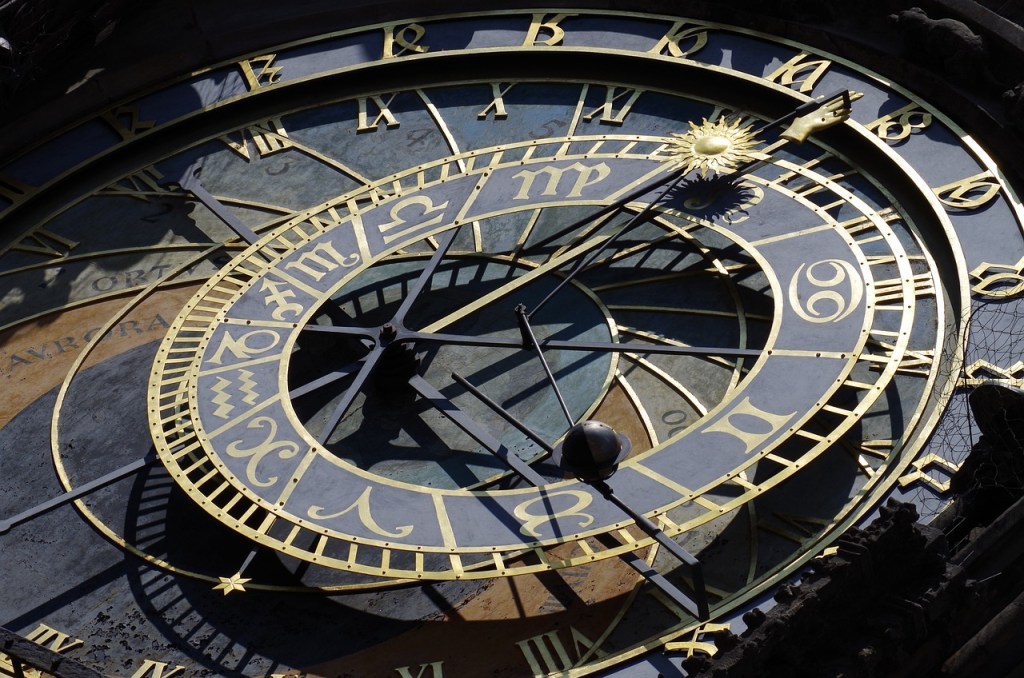
According to the interpretation of the Tengrist Society, (“Contemporary Tengrism”) Tengri is the one and only god, the architect and builder of the universe, (with all its possible dimensions) the source of all light, the eternal power, surrounding everything, and the clockmaker of spacetime.
It is the only true source of power and wisdom, and It is in everything for everything is from It.
Name of the One in Different Turkic Languages:
- Old Turkic: Kök Teŋri/Тeŋiri (“Blue Heaven” or “Skygod” or “Sky-Blue God”)
- Middle Turkic; تآنغرِ;
- Ottoman Turkish: طڭرى;
- Kyrgyz: теңир;
- Modern [Turkey] Turkish: Tanrı;
- Azerbaijani Turkish: Tanrı;
- Bulgarian: Тангра;
- Proto-Turkic *teŋri / *taŋrɨ;
- Mongolian script: ᠲᠩᠷᠢ, T’ngri;
- Modern Mongolian: Тэнгэр, Tenger;
- Old Uyghur: tängri;
- Uyghur: تەڭرى tengri
***
Reviving Ancient Wisdom: The Tengrist Society’s Quest for Contemporary Tengrism
In a rapidly changing world where ancient traditions often find themselves eclipsed by the allure of modernity, the Tengrist Society seeks to bridge the gap between the wisdom of the past and the discoveries of today. TS is on a mission to resurrect and rejuvenate the ancient belief system of Tengrism by linking it to modern science and philosophy. At the heart of this endeavor is the exploration of connections between Tengrism, the Big Bang theory, and Stoicism, aiming to create a contemporary interpretation that is relevant in today’s world.
Tengrism is an ancient belief system that emerged among the Turkic and Mongolic peoples of Central Asia. At its core, Tengrism is a shamanistic and animistic worldview, venerating Tengri, the sky god, as the supreme deity. Tengrists perceive the cosmos as a harmonious and interconnected entity, where humans are an integral part of the natural world. While often perceived as an archaic faith, TS believes that Tengrism offers valuable insights into our relationship with the universe.
The Big Bang Theory: A Modern Scientific Revelation
In the realm of modern science, the Big Bang theory is a cornerstone of our understanding of the universe’s origin and evolution. This theory posits that the universe began as a singularity, an infinitesimal point, and subsequently expanded into the vast cosmos we observe today. TS recognizes the remarkable parallels between the concept of Tengri, the supreme sky god, and the notion of the Big Bang as the origin of the universe. By drawing connections between these ancient and contemporary ideas, TS seeks to explore the cosmic unity that transcends time and culture.
Stoicism: Living in Accordance with the Universe
To further its mission, TS also looks to Stoicism, a Western philosophy with deep resonance in the quest for a harmonious existence. Stoicism, founded by Zeno of Citium, teaches that true happiness is found by aligning one’s actions and attitudes with the rational order of the universe. This philosophy emphasizes the acceptance of what is beyond one’s control and the cultivation of virtues such as wisdom, courage, and justice. TS recognizes the compatibility between Stoic principles and Tengrism’s focus on living in accordance with the natural order of the cosmos.
Creating a Contemporary Tengrism
The Tengrist Society’s vision is to synthesize these diverse elements – Tengrism, the Big Bang theory, and Stoicism – into a coherent and contemporary belief system. The core tenets of this contemporary Tengrism can be outlined as follows:
- Cosmic Unity: At the heart of contemporary Tengrism is the concept of cosmic unity. It acknowledges the interconnectedness of all existence, from the infinitesimal singularity of the Big Bang to the vast expanse of the universe. Just as Tengrism venerates Tengri as the embodiment of the sky, this modern interpretation sees the universe as a seamless whole, where humans are but one part of a grand cosmic tapestry.
- Living in Accordance with Nature: Borrowing from Stoicism, contemporary Tengrism emphasizes the importance of living in harmony with the rational order of the cosmos. This entails recognizing the limits of personal control and cultivating virtues that enable individuals to navigate life’s challenges with resilience and wisdom.
- Ethical Living: Drawing from the ethical code of Tengrism, contemporary Tengrism encourages individuals to practice virtues such as honesty, respect for nature, and hospitality. These principles guide interactions with others and the environment, fostering a sense of unity and responsibility towards all living beings.
- Acceptance of Fate: Like both Tengrism and Stoicism, contemporary Tengrism emphasizes the acceptance of fate or destiny. It teaches individuals to embrace the natural order of the universe and refrain from resisting that which lies beyond their control, finding tranquility in surrendering to the cosmic flow.
Stoic Tengrism: An Alternative Guide for the Earthfolk
The Tengrist Society’s quest for Contemporary Tengrism is a testament to the enduring relevance of ancient wisdom in our modern world. By bridging the gap between Tengrism, the Big Bang theory, and Stoicism, TS aims to offer a philosophical framework that encourages individuals to live in harmony with the cosmos, embracing both the knowledge of modern science and the insights of ancient traditions. In doing so, they hope to inspire a deeper understanding of our place in the universe and promote a more harmonious and meaningful existence for all. As TS continues its journey, it serves as a reminder that the wisdom of the past can illuminate the path to a more enlightened future.
***

The Tengrist Society © 2025
 The Tengrist Society
.jpg)